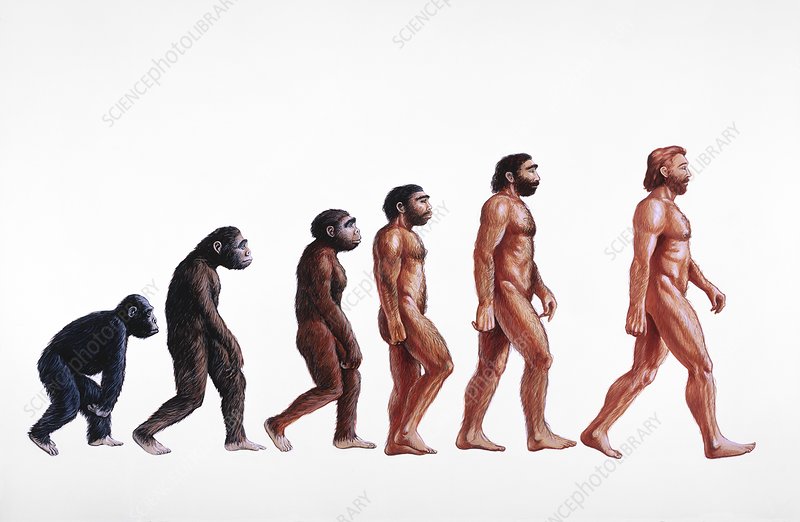
Let’s get one thing straight—you are not just the result of 100 years of evolution and a couple of gym sessions. Nope. You, me, and every swiping, scrolling Homo sapien alive today are the final products (so far) of millions of years of hardcore survival training. We’re talking about ancestors who outran predators, climbed trees, hunted wild animals, and survived ice ages without Wi-Fi.
But now… here we are. Asking ChatGPT to write blogs and Google Maps to take us to the coffee shop we’ve been to a hundred times.
From Jungle Gym to Office Chair: The Physical Evolution Rewind
Let’s rewind to about 2 million years ago.
Early humans, the Homo habilis, were evolving tools, hunting, and foraging all day. The body had to stay sharp. Literally. Physical activity was not a fitness goal—it was a survival strategy. Our muscles, reflexes, and stamina evolved for intense physical work: walking miles, carrying loads, building shelters, escaping saber-toothed tigers.
Fast-forward to 2025:
The average adult today walks less than 5,000 steps a day. That’s about half of what’s considered moderately active, and nowhere near what our ancestors did just to get food.
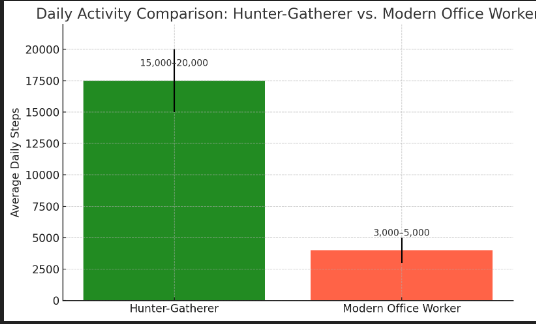
This massive drop in physical activity is giving rise to what scientists call “lifestyle diseases“—things like obesity, diabetes, and cardiovascular conditions that stem not from viruses or predators, but couches and screen time.
Mind the (Brain-Body) Gap
Now here’s where it gets spookier. It’s not just our bodies getting lazier—our minds are on the same slippery slope.
Our brains evolved in a world of real-time decision-making:
“Should I eat this mushroom or will it kill me?”
“Is that rustle a rabbit or a lion?”
This constant challenge kept our cognitive systems sharp. But in the last 100 years—thanks to industrialization and especially technology—we’ve outsourced a lot of thinking. You don’t need to remember phone numbers, directions, even birthdays anymore. There’s an app for that. Or five.
Helpful? Definitely. But too much of it can reduce mental resilience and critical thinking—skills we used to depend on for survival.
The Age of AI: Thinking is the New Typing
Enter the AI revolution. If technology so far has replaced physical work (hello, washing machines and elevators), AI is now replacing mental work.
We’re already using AI to write, design, plan, code, and even make decisions. Cool, right? But here’s the kicker:
If machines keep doing all the thinking, what happens to the thinkers?
Imagine a future where humans are no longer the most intelligent species on Earth—not because AI got smarter, but because we got dumber.

Some scientists are already worried that we might be nudging ourselves toward the 6th mass extinction—not by asteroid or volcano, but by becoming obsolete in our own world.
But It’s Not All Doom and Gloom
Humans are still adaptable, conscious beings. We’re the species that went from cave paintings to space stations. So all hope isn’t lost. But we do need to start steering the wheel again.
Here’s what we can do:
- Reclaim Physicality:
Walk more. Stretch often. Lift things. Dance. Even vacuuming counts. Your body is designed to move, not just sit and scroll. - Engage Your Brain:
Do puzzles. Write by hand. Learn a language. Try remembering your passwords (okay, maybe just one). - Use AI Consciously:
Let AI assist, not replace. Use it to expand creativity or productivity—not to outsource all thinking. - Reconnect with Nature:
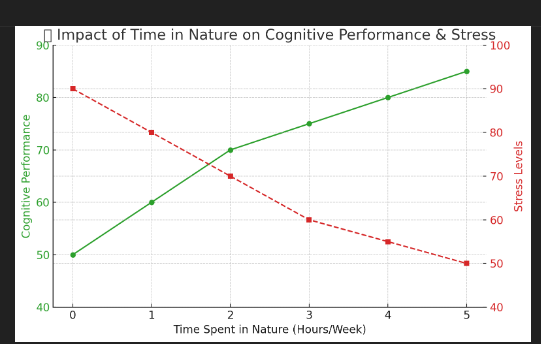
Forest bathing is a real thing. Time in nature has been shown to improve mental health, creativity, and even immunity.
TL;DR – Are We Evolving or Devolving?
We’ve come a long way from swinging in trees—but modern convenience is starting to swing back. As we hand more physical and mental effort to machines, we risk losing the very traits that made humans extraordinary in the first place.
But with awareness, action, and maybe a little less doomscrolling, we can choose to evolve consciously, not just conveniently.
So, stretch those limbs, flex that brain, and keep asking:
Am I using the machine—or is it using me?